
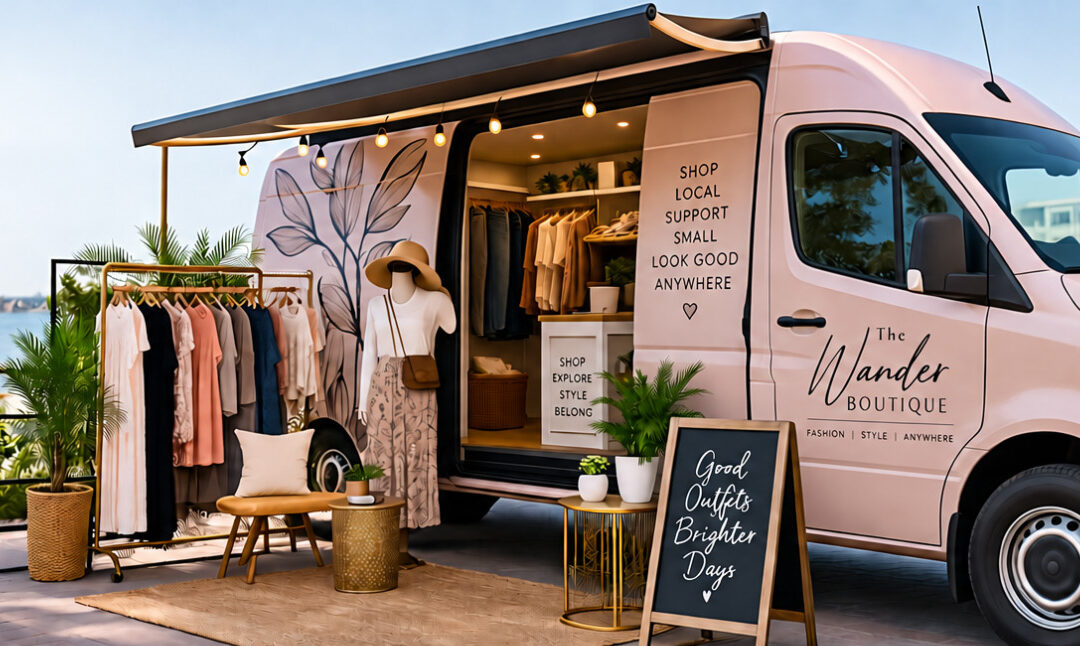
Custom Mobile Boutiques: Build a Retail Store on Wheels
Times are definitely changing, and retail is no longer limited to a storefront.
Customers shop at events, pop-ups, private appointments, festivals, markets, workplaces, and increasingly from wherever they happen to be. For retailers and entrepreneurs, that creates an opportunity: instead of waiting for customers to come to the store, bring the store to the customer.
At EVO Upfitting, we design and build custom mobile boutiques and mobile retail vans that turn commercial vehicles into professional, branded shopping environments. From fashion and apparel to specialty products and pop-up retail, a mobile boutique can expand your reach without requiring another permanent retail location.
This guide covers:
- The benefits of operating a mobile boutique
- How businesses use mobile retail vans
- Common vehicle platforms for mobile boutique builds
- What goes into a custom mobile boutique
- The mobile boutique design and build process
- Branding, power, lighting, storage, and customer experience
- Why a professionally built mobile store can help your business grow
Why More Retailers Are Taking Their Stores on the Road
Traditional retail locations still have an important role—but they aren’t the only way to reach customers.
A permanent storefront limits a business to one physical location. A mobile boutique can operate wherever the customers are.
That flexibility makes a mobile retail vehicle especially useful for businesses that want to:
- Reach new geographic markets
- Participate in events and pop-ups
- Create unique shopping experiences
- Test new markets without opening another storefront
- Offer private or appointment-based shopping
- Increase brand visibility while traveling
- Bring products directly to customers
A well-designed mobile boutique is more than a vehicle carrying inventory. It becomes a fully functioning retail environment on wheels.
The Benefits of a Custom Mobile Boutique
A professionally designed mobile boutique can provide advantages that a traditional retail location simply cannot.
Take Your Store to the Customer
A huge benefit of going mobile with your retail business is fairly obvious- mobility!
Instead of asking customers to travel to your location, your business can travel to them. A mobile boutique can be positioned at:
- Festivals and community events
- Shopping centers
- Corporate campuses
- Private events
- Sporting events
- Pop-up markets
- Neighborhoods
- Promotional events
- Customer homes or private appointments
This creates opportunities to sell in locations that would otherwise be difficult or impossible to reach with a permanent store.
Expand Your Market Without Another Storefront
Opening a second retail location requires significant investment in rent, utilities, construction, staffing, and ongoing overhead.
A mobile boutique provides another way to expand your physical presence.
The vehicle can function as an additional retail location that moves between markets based on demand, seasonal events, and business strategy.
For established retailers, it can complement an existing storefront. For new businesses, it can provide a way to launch a physical retail concept without committing to a traditional commercial space.
Create a Memorable Customer Experience
A mobile boutique can be designed around the experience you want customers to have.
Custom shelving, product displays, lighting, mirrors, flooring, seating, fitting areas, and branded finishes can transform the interior into an environment that feels like an extension of your brand.
The result isn’t simply a van filled with merchandise.
It’s a store on wheels.
Turn the Vehicle Into a Marketing Tool
Your mobile boutique is visible everywhere it travels.
Professional exterior graphics and vehicle wraps can turn the entire vehicle into a moving advertisement for your business.
That means the vehicle can generate brand awareness while:
- Driving between locations
- Sitting at events
- Parked outside businesses
- Serving customers
- Traveling through local communities
A mobile retail vehicle can therefore serve two purposes at once: retail space and mobile marketing.
How Businesses Use Mobile Boutique Vans
Custom mobile boutiques can be adapted to a wide variety of retail concepts.
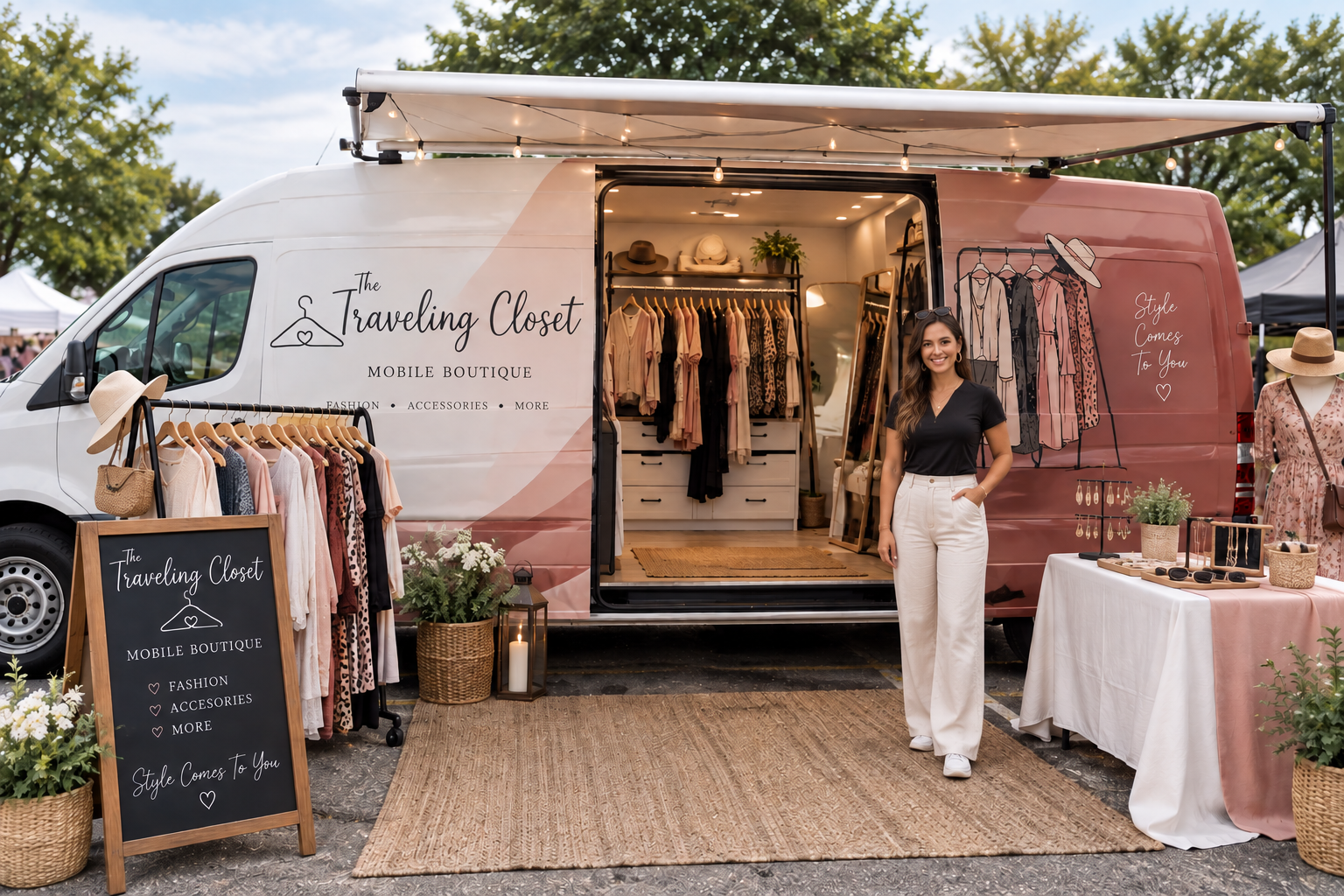
Fashion and Apparel
Fashion is one of the most natural applications for a mobile boutique.
A custom interior can include:
- Clothing racks
- Shelving
- Display cabinetry
- Full-length mirrors
- Changing areas
- Product lighting
- Secure inventory storage
- Clothing steamers
A professionally designed layout makes it possible to display merchandise effectively while giving customers room to browse, try products on, and interact with staff.
Jewelry and Accessories
Smaller products require a different type of display environment.
Custom cases and secure storage can provide organized presentation while protecting higher-value merchandise.
Lighting can also be designed specifically around product presentation, helping jewelry, accessories, and other premium products stand out.
Beauty and Cosmetics
Mobile boutiques can be configured for beauty brands, cosmetics companies, and specialty retailers that want to take their products directly to customers.
Depending on the business model, a vehicle can incorporate product displays, mirrors, counters, storage, lighting, and dedicated areas for demonstrations or consultations.
Pop-Up Retail
A mobile boutique can serve as a permanent pop-up shop that travels from location to location.
Instead of building a temporary retail environment for every event, the vehicle itself becomes the retail environment.
That can make event deployment faster and provide a consistent brand experience from one location to the next.
Specialty and Experiential Retail
Mobile retail isn’t limited to clothing.
Custom vehicles can be designed around virtually any product category where customers benefit from seeing, touching, trying, or purchasing products in person.
The interior is built around the merchandise and customer experience—not around a generic van layout.
Choosing the Right Vehicle for a Mobile Boutique
The vehicle platform is one of the first decisions in the build process.
The right choice depends on inventory volume, customer capacity, interior layout, driving requirements, budget, and how frequently the vehicle will be deployed.
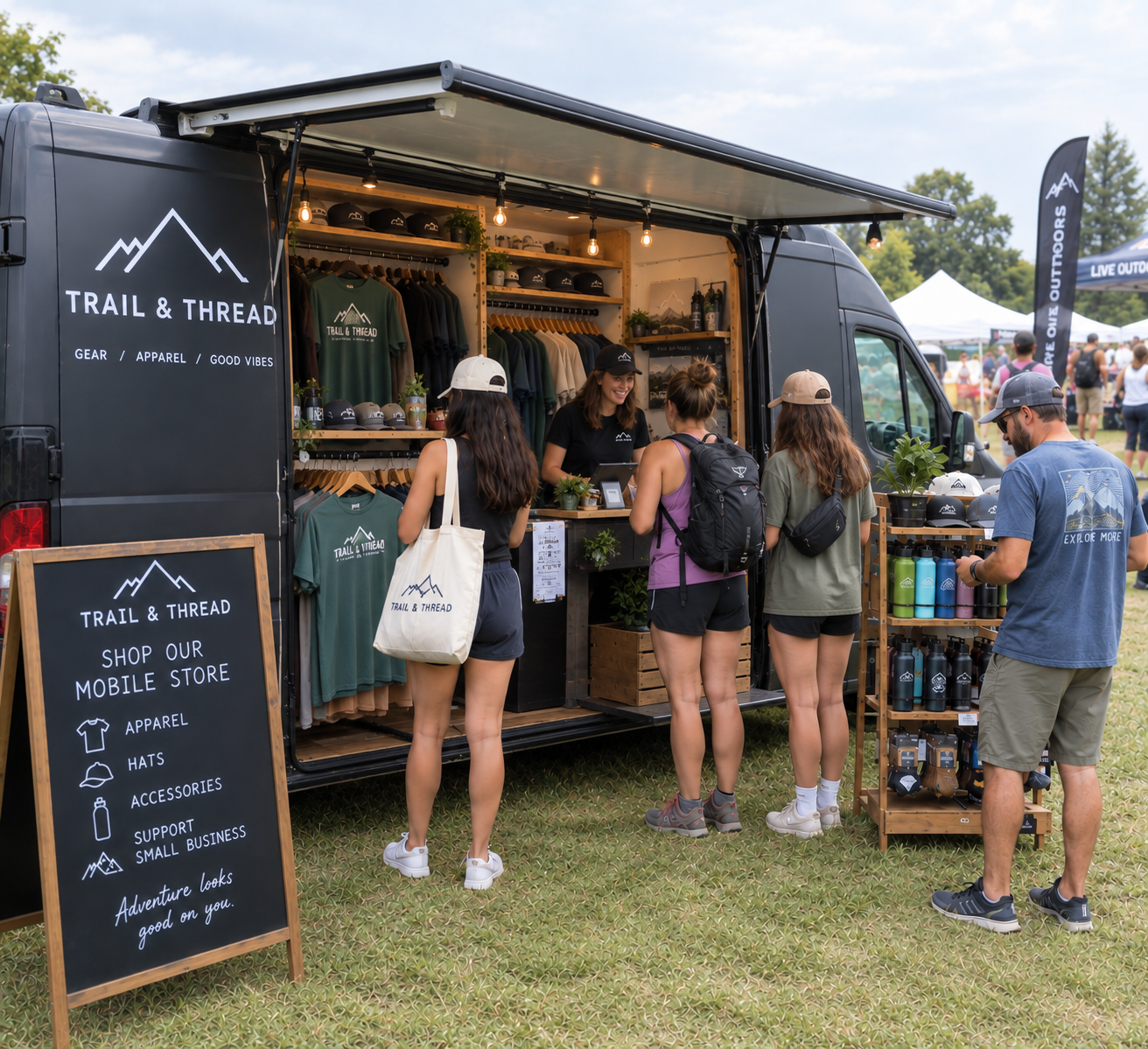
Mercedes-Benz Sprinter Mobile Boutiques
The Mercedes-Benz Sprinter is a popular platform for premium mobile retail applications.
Its available interior height and length provide room for:
- Custom retail displays
- Clothing racks
- Cabinetry
- Mirrors
- Seating
- Changing areas
- Technology
- Branding
A Sprinter can be especially effective for businesses that want a polished, upscale retail environment.
Ford Transit Mobile Boutiques
Ford Transit vans provide another versatile platform for mobile retail.
Different roof heights and configurations allow the vehicle to be adapted to a variety of business requirements.
Transit builds can accommodate custom shelving, displays, cabinetry, electrical systems, lighting, and other retail equipment.
Ram ProMaster Mobile Boutiques
The Ram ProMaster’s wide interior can be useful when maximizing usable floor and wall space is important.
Its interior dimensions can provide flexibility for custom cabinetry, shelving, displays, and customer circulation.
Larger Trucks, RVs, and Specialty Vehicles
Businesses requiring significantly more retail space may benefit from larger platforms.
A larger vehicle can support:
- Multiple customer areas
- Larger product inventories
- Multiple employees
- Larger displays
- More extensive changing areas
- Expanded electrical systems
- Additional climate-control equipment
EVO Upfitting can help determine which vehicle platform makes sense based on how the mobile boutique will actually operate.
Watch a Mobile Boutique build in progress
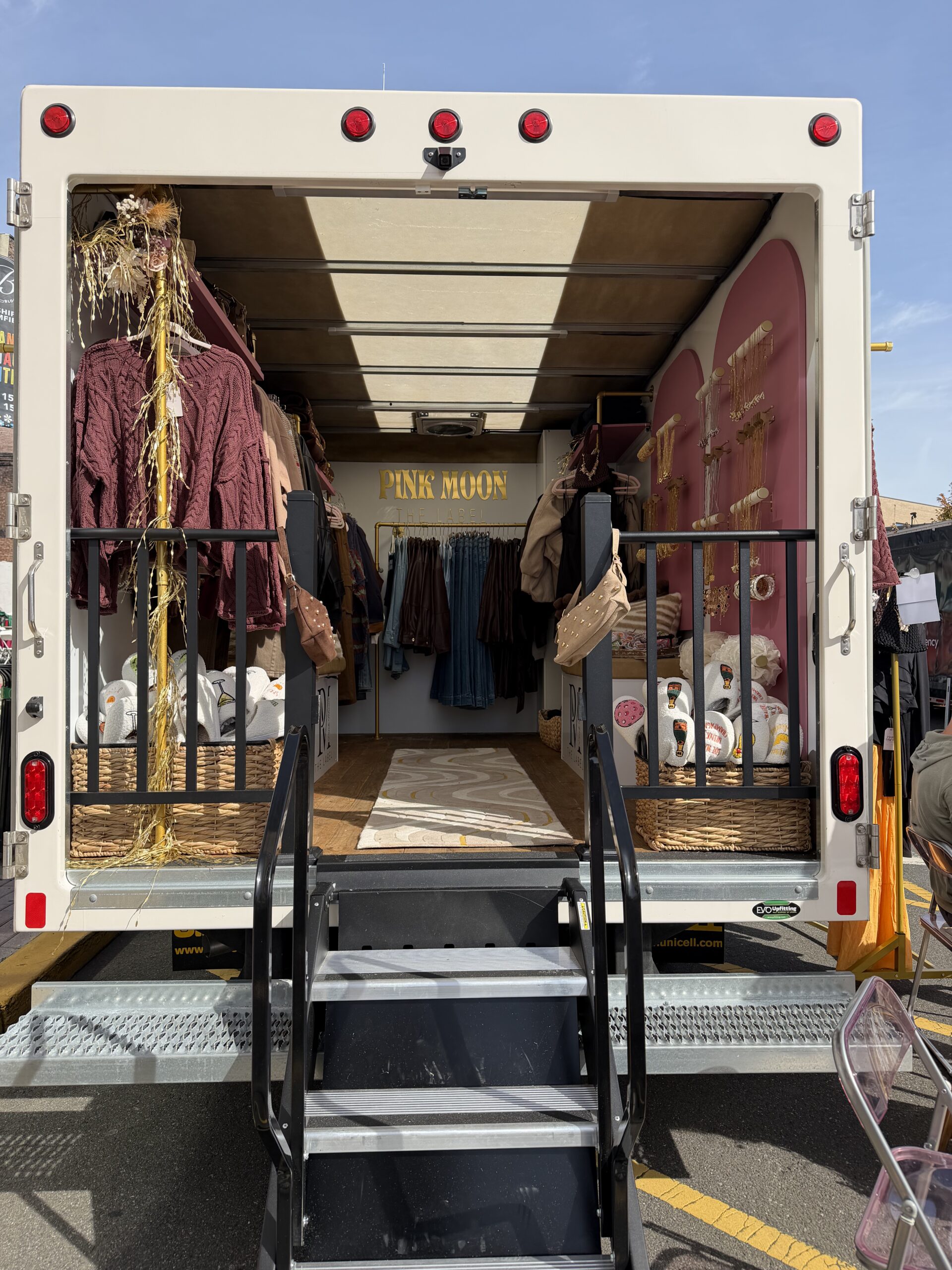
Check out a recent build utilizing a Box Truck for a Mobile Clothing and Jewelry Boutique
View the finished build, ready to hit the road in style
This project is ready to be loaded up with inventory and roll out to it’s first event!
What Goes Into a Custom Mobile Boutique?
The best mobile boutiques are designed around the customer journey.
- Where does the customer enter?
- Where do they look first?
- How is merchandise displayed?
- Where is inventory stored?
- Where does the employee work?
- How will customers move through the vehicle?
- Every one of these questions affects the final layout.
Custom Shelving and Product Displays
Retail display space is one of the most important parts of a mobile boutique.
Custom shelving and cabinetry can be designed around the dimensions of the products being sold.
This allows businesses to maximize usable space while keeping merchandise organized and visually appealing.
Instead of trying to fit off-the-shelf furniture into a van, the interior can be fabricated specifically for the vehicle and the business.
Storage and Inventory Organization
A mobile store needs storage that is both accessible and secure.
Custom cabinetry can provide dedicated locations for:
- Merchandise
- Packaging
- Supplies
- Equipment
- Point-of-sale hardware
- Cleaning products
- Business materials
Good storage design also keeps the customer-facing area clean and uncluttered.
Lighting
Lighting serves both functional and visual purposes.
A mobile boutique may use a combination of overhead, accent, and task lighting to make the interior comfortable while highlighting merchandise.
The lighting plan should be considered early in the design process so wiring and fixtures can be integrated cleanly into the build.
Flooring and Interior Finishes
The interior finishes help determine how the mobile boutique feels to customers.
Custom flooring, wall treatments, cabinetry, trim, and ceiling finishes can create a cohesive retail environment rather than the appearance of a converted work vehicle.
The goal is to make the interior feel intentional, professional, and consistent with the brand.
Mirrors and Changing Areas
For apparel businesses, a changing area can dramatically improve the functionality of the vehicle.
A custom partition can create separation between the retail area and fitting area while also incorporating a full-length mirror.
This allows the vehicle to function much more like a traditional clothing store.
Power and Electrical Systems
Retail vehicles often require power for:
- Interior lighting
- Point-of-sale equipment
- Product displays
- Clothing steamers
- Charging
- Electronics
- Auxiliary equipment
The electrical system should be designed around the equipment the business actually intends to use.
Climate Control and Comfort
A mobile retail environment needs to remain comfortable in changing weather conditions.
Depending on the vehicle and application, the build can incorporate insulation, ventilation, and auxiliary HVAC solutions to make the interior more usable throughout the year.
Customer comfort matters—especially when shoppers may spend significant time inside the vehicle.
The Custom Mobile Boutique Build Process
A successful mobile retail build starts long before fabrication begins.
Step 1: Define the Business and Customer Experience
The first step is understanding how the vehicle will be used.
Important questions include:
- What products will be sold?
- How much inventory needs to be carried?
- How many customers will be inside at once?
- Will customers need to try products on?
- How many employees will operate the vehicle?
- Where will the boutique typically be deployed?
- What equipment requires electrical power?
- How should the vehicle represent the brand?
These answers establish the foundation for the design.
Step 2: Select the Vehicle Platform
Once the requirements are established, the appropriate vehicle can be selected.
The goal isn’t simply to choose the largest van available.
The vehicle needs to balance:
- Interior space
- Payload
- Maneuverability
- Operating requirements
- Customer capacity
- Equipment needs
- Budget
Choosing the right platform at the beginning helps prevent expensive compromises later.
Step 3: Design the Interior Layout
The interior is then planned around the retail experience.
This is where display locations, shelving, cabinetry, customer circulation, employee workspace, fitting areas, storage, lighting, and equipment are coordinated.
The objective is to make every square foot work.
Step 4: Fabricate the Custom Components
Once the design is finalized, custom components can be fabricated and installed.
Depending on the project, this may include:
- Shelving
- Cabinets
- Partitions
- Display fixtures
- Counters
- Flooring
- Wall panels
- Seating
- Mirrors
- Equipment mounts
Because these components are designed specifically for the vehicle, the finished interior can be much more efficient than a generic retail conversion.
Step 5: Install Power, Lighting, and Equipment
Electrical systems, lighting, power equipment, and other technology are integrated into the build.
Everything is positioned around the final layout to minimize exposed wiring and maintain a clean appearance.
Step 6: Add Branding and Graphics
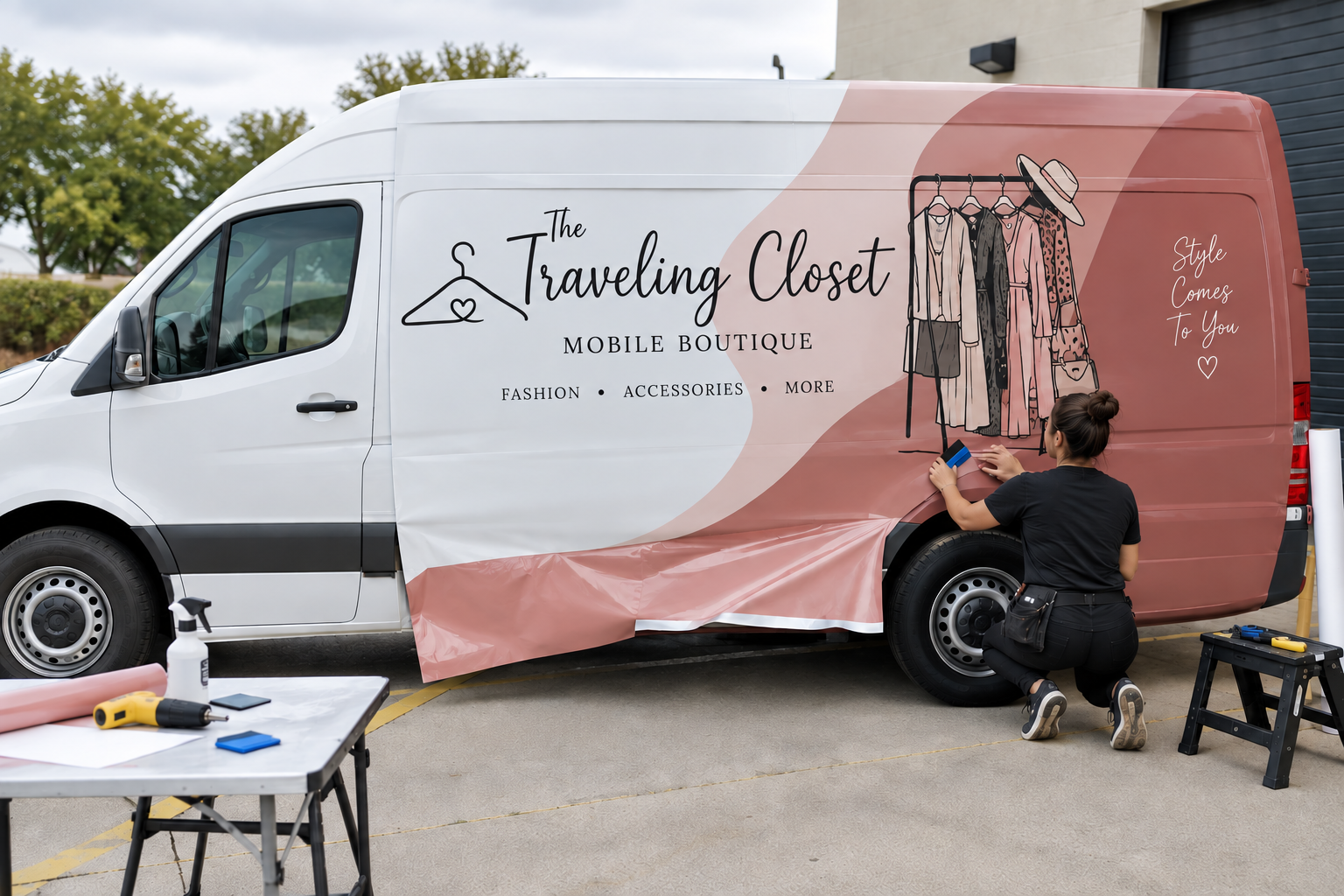
The exterior is an important part of the mobile boutique.
Professional graphics can transform the vehicle into a recognizable extension of the brand.
Vehicle wraps, logos, messaging, and window graphics can help turn the mobile boutique into a rolling marketing asset.
Step 7: Final Inspection and Delivery
Before the vehicle goes into service, the completed build should be checked for functionality, fit, finish, and usability.
The goal is a mobile boutique that is ready to operate—not simply a finished-looking vehicle.
A Mobile Boutique Should Be Designed Around Your Brand
One of the biggest advantages of a custom build is the ability to create an environment that reflects the business.
- A luxury fashion company may want an upscale, minimalist interior.
- A children’s retailer may want a bright, approachable environment.
- A specialty retailer may need dense product storage and highly organized displays.
- There is no single layout that works for every business.
The best mobile boutique is the one designed around your products, customers, and operating model.
Why Choose EVO Upfitting for a Custom Mobile Boutique?
EVO Upfitting combines vehicle upfitting, custom fabrication, electrical integration, and vehicle graphics to create complete mobile retail solutions.
That means businesses can work with one team to coordinate the major elements of the build instead of managing multiple unrelated vendors.
From the initial concept through fabrication and finishing, the goal is to create a mobile retail environment that is practical, durable, professional, and aligned with your brand.
Serving New Jersey, New York, and the Surrounding Region
EVO Upfitting is based in Toms River, New Jersey, and works with businesses throughout the surrounding region.
For businesses in:
- New Jersey
- New York City
- Long Island
- Pennsylvania
- The broader Tri-State area
A local custom upfitter can make it easier to discuss layouts, review design options, and coordinate the build process.
Is a Custom Mobile Boutique Right for Your Business?
If your customers are spread across different locations—or if you want to reach markets beyond a traditional storefront—a mobile boutique can turn your vehicle into a powerful sales and marketing platform.
A custom mobile retail van can help you:
- Bring your products directly to customers
- Expand into new markets
- Participate in more events
- Create a memorable shopping experience
- Reduce dependence on a single retail location
- Build brand visibility wherever you travel
The key is designing the vehicle around the way your business actually operates.
Get Your Store on the Road
Ready to turn your retail concept into a mobile boutique?
EVO Upfitting can help you design and build a custom mobile retail vehicle around your products, customers, brand, and day-to-day requirements.